


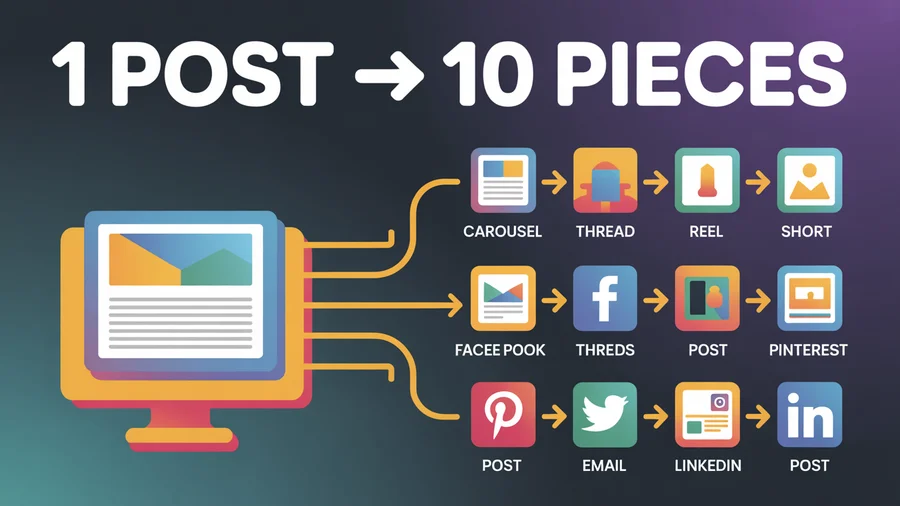
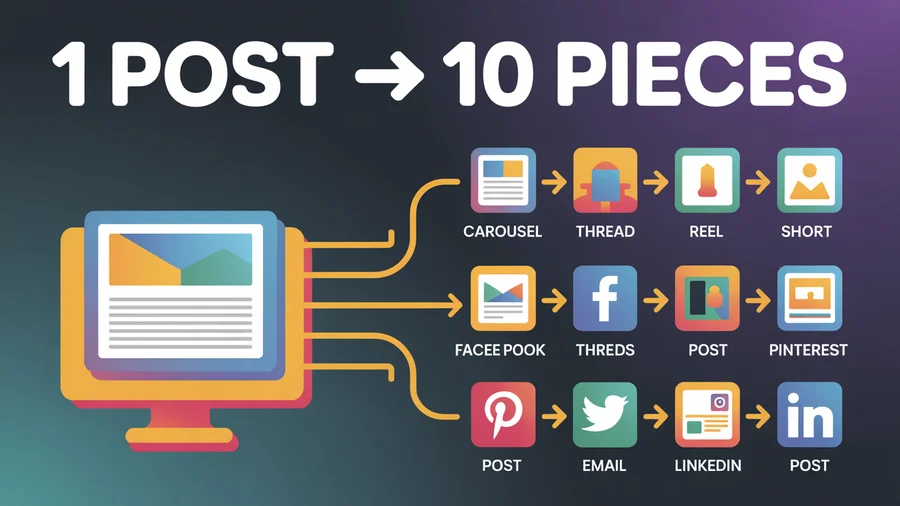
Creating original content consistently is one of the most resource-intensive aspects of social media management. Yet many organisations sit on a large body of material — articles, videos, research, presentations, case studies — that is used once and then largely forgotten. Content repurposing is the practice of taking existing material and adapting it for different formats and platforms, extending its value and reach without requiring entirely new creative effort each time.
Why Repurposing Makes Sense
A single piece of well-researched content can reasonably serve multiple audiences, platforms and formats. A long-form blog post might become a short video script, a series of social posts, an infographic, a podcast episode outline and a newsletter feature. Each of these formats reaches a different kind of audience and meets a different kind of need — some people prefer video, others prefer text, others encounter your content through audio.
Repurposing is also supported by the way people actually consume content. Research consistently shows that most people need to encounter an idea multiple times, in different contexts, before it registers. Presenting the same core insight across formats reinforces the message without appearing repetitive to any single audience segment.
Identifying Repurposable Content
Not all content is equally worth repurposing. The best candidates are pieces with sustained relevance — evergreen content that addresses questions your audience will still be asking in a year’s time — and content that performed unusually well in its original format. Strong engagement is a signal that the topic resonates, making it worth exploring through other formats to reach the people who would have engaged differently.
Time-sensitive content, news-driven pieces and content that refers to specific events or periods are generally less suitable for extensive repurposing, though even these can sometimes yield statistics or insights that remain valid over time. Content Marketing Institute recommends auditing your existing content library before starting new production to identify what can be extended and refreshed.
Repurposed Content Works Best When the Message Fits the Platform
Turning one strong idea into multiple social posts can extend its lifespan, but effective repurposing is not as simple as copying the same caption everywhere. Each platform has its own audience behavior, format, and expectations, so the message should be reshaped to suit the channel while keeping the core idea consistent. The same principle applies to influencer marketing, where the strongest campaigns match the creator, platform, audience, and brand objective instead of forcing one piece of content into every environment. SPM’s approach likewise emphasizes creator fit, strategic briefs, and measurable outcomes rather than treating influencer work as a standalone tactic.
A Cross-Platform Strategy Creates More Value From Every Asset
A single interview, video, article, or campaign can become several useful pieces of content when each version is adapted with purpose. A long-form video might become a short vertical clip, a quote-led LinkedIn post, a visual carousel, and a supporting blog reference without feeling repetitive. The goal is not to publish more for the sake of volume, but to give the same idea multiple entry points for different audiences. When this approach is coordinated with creator partnerships, earned media, and broader brand communications, repurposed content can support reach, credibility, and sustained engagement across channels.
Platform-Appropriate Adaptation
Repurposing is not simply copying and pasting content from one platform to another. Each platform has its own norms, formats and audiences. A LinkedIn article requires a different tone and structure than a Twitter thread or a TikTok script. The core idea may be consistent, but the expression of it should be native to each platform.
This adaptation process is where the creative work of repurposing lies. Identifying the most compelling angle for each platform, choosing the right format, and writing or filming in a way that feels at home on that channel turns a repurposing exercise into genuine multi-channel content strategy.
Building A Repurposing Workflow
For repurposing to happen reliably, it needs to be built into the content production process from the start. Commissioning a long-form piece with specific repurposing outputs already planned means the content can be created with those uses in mind, rather than retrofitted awkwardly after the fact.
Maximising Every Piece You Create
Consistent social media management from a company like 99social ensures content is not only created but distributed intelligently across platforms, with proper adaptation for each.
Every piece of content your organisation creates is an investment. Repurposing ensures that investment pays its full return.