









The human body has a remarkable capacity to repair itself—but that capacity has limits. Injuries, inflammation, and cellular wear accumulate faster than natural recovery processes can manage. That’s where modern peptide research is stepping in. Studies show that short-chain amino acid sequences can act as precise biological messengers, signaling tissue repair, reducing inflammation, and accelerating cellular regeneration. The growing scientific interest in peptides for healing reflects a broader shift in how researchers approach recovery and tissue repair at the molecular level.
What the Numbers Say About Peptide Research
Peptide science has expanded rapidly over the past decade. The global peptide therapeutics market was valued at approximately USD $39.5 billion in 2023 and is projected to grow at a compound annual growth rate (CAGR) of 9.4% through 2030, according to Grand View Research. This growth is largely driven by increasing research activity around musculoskeletal repair, wound healing, and anti-inflammatory applications.
More than 60 peptide-based compounds have received regulatory approval globally, with hundreds more currently in clinical and pre-clinical trials. This volume of research activity signals a clear and sustained scientific interest in how peptides interact with the body’s natural repair systems.
Key Peptides Under Research for Healing Applications
Several peptides have attracted significant research attention for their potential role in recovery and tissue repair.
BPC-157
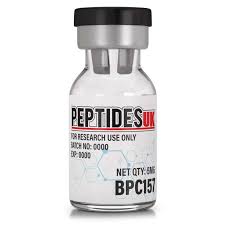
BPC-157 (Body Protection Compound-157) is a synthetic peptide derived from a protein found in gastric juice. Pre-clinical studies have shown its involvement in angiogenesis—the formation of new blood vessels—which is a critical step in tissue repair. Research published in peer-reviewed journals has noted its potential role in tendon-to-bone healing and gut mucosal recovery. It is currently studied exclusively in laboratory and animal research settings.
TB-500
TB-500 is a synthetic version of Thymosin Beta-4, a naturally occurring peptide present in virtually all human and animal cells. Research has focused on its role in actin regulation, cell migration, and wound closure. Pre-clinical data suggests TB-500 may support faster recovery from soft tissue injuries by promoting cell proliferation at the site of damage.
GHK-Cu (Copper Peptide)
GHK-Cu is a naturally occurring copper complex found in human plasma. It has been widely studied for its involvement in collagen synthesis, wound contraction, and antioxidant activity. Research indicates GHK-Cu levels in the body decline with age—from approximately 200 ng/mL in young adults to around 80 ng/mL by age 60—which has driven scientific interest in its potential role in age-related tissue degradation and recovery.
Why Purity Matters in Peptide Research
The integrity of research data depends heavily on compound quality. Impurities in peptide samples can skew experimental results, producing unreliable or misleading outcomes. This is why researchers and institutions prioritize sourcing from suppliers that use High-Performance Liquid Chromatography (HPLC) and Mass Spectrometry (MS) verification to confirm purity levels consistently above 99%.
At The Peptide Labs, every compound undergoes rigorous in-house analytical testing before it reaches a research facility. The commitment to verified purity is not a differentiator—it is a baseline requirement for credible scientific inquiry.
The Road Ahead for Healing Research
Peptide science is not a niche pursuit. It sits at the intersection of biochemistry, regenerative medicine, and molecular biology. As sequencing technology improves and synthesis techniques become more refined, the specificity and reliability of peptide compounds will only increase.
Researchers focused on musculoskeletal repair, wound healing, and cellular regeneration are likely to find peptides an increasingly central tool in their work. The data supports it. The science demands it.
For research-grade peptides sourced from a verified Canadian supplier, explore the full range available at The Peptide Labs—where purity standards and rigorous quality control are built into every vial.